


Are you struggling to find the perfect Bengali font for your writing? Choosing the right font can make your words stand out and connect better with your readers.
Whether you’re crafting a story, designing a flyer, or writing a blog, the font you pick plays a huge role in how your message is received. You’ll discover which Bengali fonts are the easiest to read, look the most professional, and truly bring your writing to life.
Keep reading to find the font that fits your style and needs perfectly!

Credit: www.youtube.com
Popular Bengali Fonts
Choosing the best Bengali font for writing depends on style, readability, and device compatibility. Popular Bengali fonts come in various styles, each suited for different purposes. Some fonts have a traditional look, while others appear fresh and modern. Writers and designers pick fonts based on the tone of their content and audience needs. Understanding popular Bengali fonts helps in making the right choice for blogs, books, websites, or print materials.
Classical Fonts
Classical Bengali fonts represent the traditional script style seen in old books and newspapers. These fonts have a strong cultural feel and clear letter shapes. They are perfect for formal writing, literature, and historical documents.
Popular classical Bengali fonts include:
- Siyam Rupali: Widely used in newspapers and print media.
- SolaimanLipi: Clean and easy to read, great for formal texts.
- Bangla Sangam MN: A classic font with elegant curves.
These fonts maintain the traditional look of Bengali script. They work well in printed books and official papers but may look old-fashioned on digital screens.
| Font Name | Style | Best Use |
|---|---|---|
| Siyam Rupali | Traditional | Newspapers, Print Media |
| SolaimanLipi | Classic | Formal Documents, Books |
| Bangla Sangam MN | Elegant Traditional | Literature, Official Papers |
Modern Fonts
Modern Bengali fonts focus on simplicity and digital friendliness. These fonts look neat on screens and are popular for websites, blogs, and apps. They have smooth edges and clear letters, making reading easy on phones and computers.
Some popular modern Bengali fonts are:
- Noto Sans Bengali: Simple and clean, works well on all devices.
- Baloo Da 2: Rounded style, friendly and informal.
- Hind Siliguri: Minimalist design, great for web content.
Modern fonts suit creative work, casual writing, and online content. They support various screen sizes and resolutions, improving user experience.
| Font Name | Style | Best Use |
|---|---|---|
| Noto Sans Bengali | Simple, Clean | Websites, Mobile Apps |
| Baloo Da 2 | Rounded, Friendly | Blogs, Informal Texts |
| Hind Siliguri | Minimalist | Online Content, UI Design |
Unicode Vs Non-unicode
Understanding Unicode and Non-Unicode Bengali fonts is key for writing and publishing. Unicode fonts follow a universal standard for encoding text. This means Bengali letters display correctly on almost all devices and software.
Non-Unicode fonts use custom encoding. They often need special software or keyboard layouts. These fonts may cause compatibility issues, especially on newer systems.
Advantages of Unicode fonts:
- Works across all platforms and browsers
- Easy to search and copy text
- Supports multiple languages in one document
- Better for SEO and web publishing
Non-Unicode fonts may still be used in older projects but are less flexible today.
| Feature | Unicode Fonts | Non-Unicode Fonts |
|---|---|---|
| Compatibility | High | Limited |
| Text Search | Supported | Not Supported |
| Keyboard Layout | Standard | Custom |
| Web Use | Ideal | Not Recommended |
Font Readability
Choosing the best Bengali font for writing depends greatly on its readability. Readability means how easy it is for readers to understand the text quickly and comfortably. A font with good readability reduces eye strain and helps readers stay focused. For Bengali script, where letters can be complex, readability becomes even more important.
You may like: Bangla Font for Adobe Premiere Pro
Clarity And Legibility
Clarity and legibility refer to how clear and distinct each letter appears. Bengali fonts vary widely in design. Some fonts have thick strokes, while others are thin or decorative. Clear fonts make each character easy to recognize.
Key points for clarity and legibility:
- Simple shapes: Fonts with simple, clean shapes improve letter recognition.
- Consistent strokes: Uniform stroke width helps maintain balance in text.
- Distinct characters: Letters should not look too similar to avoid confusion.
- Open counters: The open space inside letters must be visible.
Some popular Bengali fonts known for their clarity include SolaimanLipi, Siyam Rupali, and Kalpurush. These fonts have good spacing and clear shapes, making reading easier.
| Font Name | Clarity | Legibility | Best Use |
|---|---|---|---|
| SolaimanLipi | High | High | Web and Print |
| Siyam Rupali | Medium | High | Body Text |
| Kalpurush | High | Medium | Headings and Titles |
Font Size And Spacing
Font size and spacing are critical for Bengali font readability. Bengali script has complex shapes that need enough space to look clear. Small font sizes can blur details, while tight spacing can make text hard to read.
Important factors to consider:
- Minimum font size: Use at least 14px for screen reading and 10pt for print.
- Line height: Set line height to 1.5 to 1.8 times the font size for better line spacing.
- Letter spacing: Slightly increased letter spacing helps separate characters.
- Paragraph spacing: Use extra space between paragraphs to avoid crowding.
Proper size and spacing reduce eye fatigue and improve reading speed. Adjust these depending on the medium. For example, mobile screens need slightly larger fonts and more spacing.
| Medium | Recommended Font Size | Line Height | Letter Spacing |
|---|---|---|---|
| Screen (Desktop) | 14-16px | 1.5 – 1.7 | 0.5px |
| Screen (Mobile) | 16-18px | 1.6 – 1.8 | 0.7px |
| 10-12pt | 1.5 – 1.7 | Normal |
Screen Vs Print
Bengali fonts behave differently on screens and print. Each medium has unique needs to keep text readable.
On screens:
- Fonts must be clear at various resolutions.
- Screens use pixels; fonts need to scale without losing detail.
- Anti-aliasing smooths edges for better display.
- Fonts like
SolaimanLipiandSiyam Rupaliwork well on screens.
For print:
- Fonts require sharp edges and good contrast.
- Small details must be visible after printing.
- Fonts with thicker strokes print better on paper.
KalpurushandLikhanare great for printed materials.
Test fonts in both media before finalizing. Screen fonts need more spacing and size. Printed fonts need clarity and stroke weight to avoid blurring. Proper font choice ensures comfortable reading in any format.
Related: Best Bangla Font for Video Editing: Top Stylish Picks for Creators
Aesthetic Appeal
Aesthetic appeal plays a vital role in choosing the best Bengali font for writing. A font is not just a tool for communication; it also shapes the reader’s experience. The beauty and style of Bengali fonts influence how text feels and looks on a page or screen. Selecting a font with strong aesthetic appeal can enhance the clarity and emotional impact of your writing. Bengali fonts vary widely, from classical designs inspired by calligraphy to modern, sleek styles. Each type serves different purposes and suits different audiences. Understanding these styles helps in picking a font that matches the tone and message of your content.
Traditional Styles
Traditional Bengali fonts reflect the rich history of Bengali script and culture. They often mimic handwritten calligraphy or print styles used in old books and newspapers. These fonts give a sense of authenticity and heritage. Writers who want to connect with readers on a cultural level often prefer these fonts.
- Features: Curved lines, moderate thickness, ornamental strokes.
- Common uses: Literature, poetry, historical texts.
- Examples: Siyam Rupali, SolaimanLipi, Bangla.
Here is a simple comparison of popular traditional fonts:
| Font Name | Style | Readability | Best For |
|---|---|---|---|
| Siyam Rupali | Elegant, calligraphic | High | Books, formal writing |
| SolaimanLipi | Simple, clean | Very High | Web, newspapers |
| Bangla | Classic, traditional | Medium | Print media |
Traditional fonts create a warm and familiar feel. They connect readers to Bengali history and culture. These fonts work best for formal and artistic writing.
Contemporary Looks
Contemporary Bengali fonts offer a modern and fresh look. These fonts often have cleaner lines and less decoration. They suit digital screens and casual writing. The style is simple but stylish, making text easy to read on devices.
- Features: Minimalist design, uniform strokes, smooth curves.
- Common uses: Blogs, social media, advertising.
- Examples: Nikosh, AdorshoLipi, Rupali.
Contemporary fonts help writers reach younger audiences. They support fast reading and clear communication. These fonts also fit well with modern graphic designs.
| Font Name | Style | Readability | Best For |
|---|---|---|---|
| Nikosh | Sleek, modern | Very High | Web content, apps |
| AdorshoLipi | Clear, simple | High | Digital media |
| Rupali | Soft, rounded | High | Presentations, ads |
These fonts create a friendly and approachable feel. They are easy on the eyes and work well in any modern context. Contemporary fonts keep Bengali writing fresh and engaging.
Cultural Relevance
Cultural relevance is crucial in font choice. A Bengali font should respect the language’s traditions and values. Fonts that reflect cultural identity connect readers emotionally. They add meaning beyond just words.
Fonts vary in how much they represent Bengali culture:
- Scripts inspired by classical Bengali calligraphy show deep respect for history.
- Fonts designed for modern use balance tradition with new trends.
- Fonts that support Bengali numerals and symbols maintain cultural accuracy.
Choosing culturally relevant fonts helps preserve the beauty of Bengali writing. It also honors the community’s language heritage.
Consider these points when selecting culturally relevant fonts:
- Does the font include traditional Bengali characters?
- Is the style consistent with Bengali art and literature?
- Does it support proper rendering of Bengali script?
Fonts like Siyam Rupali and SolaimanLipi score high in cultural relevance. They blend history with modern usability. Using such fonts enhances the reader’s connection to the text and culture.
Technical Compatibility
Choosing the best Bengali font for writing depends heavily on technical compatibility. This means the font must work smoothly across different software, devices, and online platforms. A font might look beautiful but fail to display correctly on some tools or gadgets. This can cause frustration and reduce the quality of your work. Understanding technical compatibility helps pick a font that is reliable and easy to use everywhere.
Software Support
Software support is a key factor in selecting a Bengali font. The font should be compatible with popular writing and editing software. This includes word processors, graphic design tools, and publishing platforms. Fonts that support Unicode standards are more likely to work well across software.
Fonts like SolaimanLipi, Siyam Rupali, and Kalpurush have wide software support. They work well in:
- Microsoft Word
- Adobe Photoshop and Illustrator
- Google Docs
- LibreOffice
- Desktop publishing software like InDesign
The table below shows compatibility of popular Bengali fonts with common software:
| Font Name | Microsoft Word | Adobe Photoshop | Google Docs | LibreOffice |
|---|---|---|---|---|
| SolaimanLipi | ✔️ | ✔️ | ✔️ | ✔️ |
| Siyam Rupali | ✔️ | ✔️ | ✔️ | ✔️ |
| Kalpurush | ✔️ | ✔️ | ✔️ | ✔️ |
| Bangla | ✔️ | ✔️ | ✔️ | ✔️ |
Fonts not supporting Unicode may fail in some software or show incorrect characters. Always choose Unicode-compliant Bengali fonts for better software compatibility.
Device Compatibility
Device compatibility ensures the Bengali font looks good and works well on various gadgets. This includes computers, smartphones, tablets, and e-readers. A font must support different screen sizes and resolutions without losing clarity.
Fonts with clear and simple shapes perform better on small screens. This prevents letters from appearing blurry or merging together.
Consider these points for device compatibility:
- Operating Systems: The font should work on Windows, macOS, Android, and iOS.
- Screen Resolutions: It must render well on HD and low-resolution screens.
- Font Formats: Formats like TTF (TrueType) and OTF (OpenType) offer wide device support.
The table below summarizes device compatibility of common Bengali fonts:
| Font Name | Windows | macOS | Android | iOS |
|---|---|---|---|---|
| SolaimanLipi | ✔️ | ✔️ | ✔️ | ✔️ |
| Siyam Rupali | ✔️ | ✔️ | ✔️ | ✔️ |
| Kalpurush | ✔️ | ✔️ | ✔️ | ✔️ |
| Bangla | ✔️ | ✔️ | ✔️ | ✔️ |
Fonts with poor device compatibility may not display correctly or cause text overflow problems. Choose fonts tested on multiple devices for smooth performance.
Web And Mobile Use
Fonts intended for writing should also perform well on web and mobile platforms. Many Bengali writers publish online or use mobile apps. The font must load quickly and render properly in browsers and apps.
Key features for web and mobile use include:
- Web Font Formats: Support for WOFF and WOFF2 ensures faster loading on websites.
- Unicode Support: Guarantees correct display across browsers.
- Responsive Design: Font size and spacing adapt to different screen sizes.
Popular Bengali fonts like SolaimanLipi and Siyam Rupali provide web font versions. This makes them ideal for blogs, news sites, and social media content.
Below is a checklist for choosing Bengali fonts for web and mobile:
- Available in WOFF/WOFF2 formats
- Unicode-compliant
- Clear rendering on small screens
- Free or licensed for web use
- Widely supported by browsers like Chrome, Firefox, and Safari
Fonts lacking web optimization can slow page speed or show broken characters. Selecting fonts designed for web use improves user experience and readability.
Don’t miss: Best Bangla Fonts for PixelLab and Mobile Design
User Preferences
Choosing the best Bengali font depends a lot on user preferences. Different groups need fonts for various purposes. A font that works well for one person might not suit another. Understanding these preferences helps pick the right font for writing in Bengali. This section explores which fonts are popular among writers and authors, students and educators, and graphic designers.
Writers And Authors
Writers and authors focus on clarity and ease of reading. Their main goal is to make the text comfortable for long reading sessions. They prefer fonts that look traditional yet readable. Fonts like Siyam Rupali and SolaimanLipi are popular choices. These fonts have clean lines and proper letter spacing.
Key features writers look for:
- Good readability in print and digital formats
- Support for complex Bengali characters
- Professional appearance suitable for novels, articles, and essays
| Font | Best For | Why Writers Like It |
|---|---|---|
| Siyam Rupali | Books, Articles | Clear, smooth, easy on the eyes |
| SolaimanLipi | Essays, Stories | Traditional look with modern readability |
| Kalpurush | Creative writing | Simple but elegant strokes |
Writers prefer fonts that keep the reader engaged without straining their eyes. They avoid overly decorative fonts.
Students And Educators
Students and educators need fonts that support learning and teaching. Fonts must be easy to read on screens and paper. Fonts like SolaimanLipi and Noto Sans Bengali are popular. They help students focus on the content without distraction.
Important factors for this group:
- Simple shapes for easy letter recognition
- Clear distinction between similar characters
- Good size scaling for notes and presentations
| Font | Use Case | Benefits for Students/Educators |
|---|---|---|
| SolaimanLipi | Books, Notes | Clear and familiar letters |
| Noto Sans Bengali | Digital Content | Excellent screen legibility |
| Vrinda | Textbooks | Balanced design, easy on the eyes |
Teachers like fonts that work well in presentations and printed materials. Students prefer fonts that make reading easier and faster.
Graphic Designers
Graphic designers look for fonts with style and versatility. They often need fonts for logos, posters, and digital art. Fonts such as Bangla Sangam MN and AdorshoLipi are favorites. These fonts offer a mix of tradition and creativity.
Designers focus on these aspects:
- Unique and attractive appearance
- Flexibility for different sizes and formats
- Compatibility with design software
| Font | Design Use | Why Designers Choose It |
|---|---|---|
| Bangla Sangam MN | Branding, Posters | Elegant and modern look |
| AdorshoLipi | Creative Projects | Clean lines with style |
| SolaimanLipi Bold | Headings, Titles | Strong presence, easy to read |
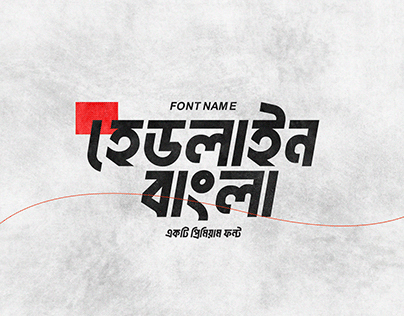
Designers often combine fonts for effect. Bold fonts highlight titles, while simpler fonts fill body text. This balance creates eye-catching designs.
Credit: www.behance.net
Tips For Choosing Fonts
Choosing the right Bengali font is essential for clear and attractive writing. Fonts influence how readers feel about your text and how easily they can read it. Selecting a font involves more than just picking one that looks good. It requires understanding your needs and the context of your writing. Here are some useful tips for choosing the best Bengali font for your work.
Purpose-based Selection
Every writing project has a goal. The font should match that goal to make the text effective. For example, a formal document needs a different font than a creative story. Think about what you want to achieve with your writing before selecting a font.
Consider the following points to guide your choice:
- Readability: Choose fonts with clear shapes and good spacing for easy reading.
- Audience: Young readers may prefer simple fonts, while older audiences might like traditional styles.
- Medium: Print and digital screens need different font features for best display.
- Purpose: Use formal fonts for official letters and casual fonts for blogs or stories.
| Purpose | Recommended Font Style | Reason |
|---|---|---|
| Official Documents | Traditional Serif Fonts | Professional and easy to read |
| Children’s Books | Simple Sans-serif Fonts | Clear and friendly appearance |
| Online Articles | Clean, Web-safe Fonts | Good readability on screens |
| Creative Writing | Decorative or Handwritten Fonts | Adds personality and style |
Matching the font with your writing purpose improves the reader’s experience. It also strengthens the message you want to share.
Balancing Style And Function
Fonts must be both attractive and easy to read. A stylish font that is hard to read will confuse readers. On the other hand, a very simple font might look boring. Finding a balance between style and function is key.
Here are ways to balance both:
- Check legibility: Make sure every letter is clear and distinct.
- Keep font size appropriate: Not too small or large for comfortable reading.
- Use font weights carefully: Bold for emphasis, regular for normal text.
- Limit font types: Use one or two fonts to avoid clutter.
- Consider line spacing: Enough space helps reduce eye strain.
Here is a simple comparison of font features:
| Feature | Style Importance | Function Importance |
|---|---|---|
| Letter Shape | Medium | High |
| Font Weight | High | Medium |
| Spacing | Low | High |
| Decorative Elements | High | Low |
Fonts that balance style with function help readers stay engaged and understand the content easily. Avoid fonts that distract from the message or strain the eyes.
Testing Before Finalizing
Testing your font choice is a critical step. It helps to see how the font works in real situations. Testing reveals if the font meets your needs and if readers can read it easily.
Follow these steps to test fonts:
- Write sample text: Use actual sentences or paragraphs from your project.
- Check on different devices: View the text on phones, tablets, and computers.
- Print samples: See how the font looks on paper if you plan to print.
- Ask for feedback: Get opinions from friends or colleagues about readability and style.
- Compare multiple fonts: Place samples side by side to choose the best one.
Here is a simple checklist for font testing:
- Is the text easy to read without strain?
- Does the font suit the tone of your content?
- Is the font clear at different sizes?
- Does it look good on various devices?
- Does the font maintain its quality when printed?
Testing ensures your font choice supports your writing goals. It reduces the chance of switching fonts later and saves time.
Frequently Asked Questions
Which Bengali Font Is Easiest To Read For Beginners?
Siyam Rupali is one of the easiest fonts for beginners. Its clear and simple style helps new learners read Bengali text without confusion. Many find it comfortable for daily use.
What Bengali Font Is Best For Professional Writing?
SolaimanLipi is widely used for professional and official documents. It looks clean and formal, making it perfect for reports and letters. This font supports clear communication.
Can I Use Free Bengali Fonts For Writing And Publishing?
Yes, many free Bengali fonts like Kalpurush and Nikosh are available online. They are suitable for personal and commercial use. Always check the license before publishing.
Conclusion
Choosing the right Bengali font depends on your writing needs. Some fonts are clear and simple, perfect for beginners. Others offer style and flair for creative projects. Always pick a font that feels easy to read and suits your purpose.
Test a few fonts before deciding. The best font makes your writing look neat and helps readers understand easily. Keep it simple, clear, and comfortable for your audience. This way, your Bengali writing will stand out and connect well with readers.
